
Evidence-Based ABA Therapy in a Structured Setting
Structured Support That Builds Real Progress.
Behavioral Framework’s in-clinic ABA therapy helps children with autism build communication, social, and daily living skills through individualized, evidence-based care. Our clinical team works closely with families to support meaningful progress and long-term development.
What Is In-Clinic ABA Therapy?
Our clinic is designed to provide a structured, supportive environment that is set up to maximize learning and progress. Each child receives individualized, one-to-one ABA therapy that is closely supervised by a Board Certified Behavior Analyst (BCBA), while also having opportunities to learn alongside peers in small groups matched by age and skill level.
Routines and activities are intentionally planned to promote skill acquisition, independence, and meaningful interaction, while targeting skills that are important for everyday functioning and future settings.
A Clinic Environment That Supports Success
Individualized ABA Therapy
- Evidence-based programs are personalized to your child’s unique strengths and goals.
- Highly-trained staff with expert supervision sessions are led by Registered Behavior Technicians (RBTs) and closely supervised by Board Certified Behavior Analysts (BCBAs).
- Data-driven progress tracking your child’s progress is tracked regularly using data, so goals and teaching strategies can be adjusted to support meaningful growth.
Build Skills For Real-Life & School Success
- Therapy focuses on developing essential skills that support everyday success, including communication, play, motor development, social interaction, self-help, and daily living skills such as toilet training.
- Foundational skills needed for success in school environments are paramount. This includes following routines, transitioning between activities, participating in group settings, and developing early learning behaviors that support attention, engagement, and classroom readiness.
- Skills are taught with the goal of being applied beyond the clinic environment. By helping children use what they learn at home, in school, and in their communities, therapy supports meaningful, long-term progress and greater independence.
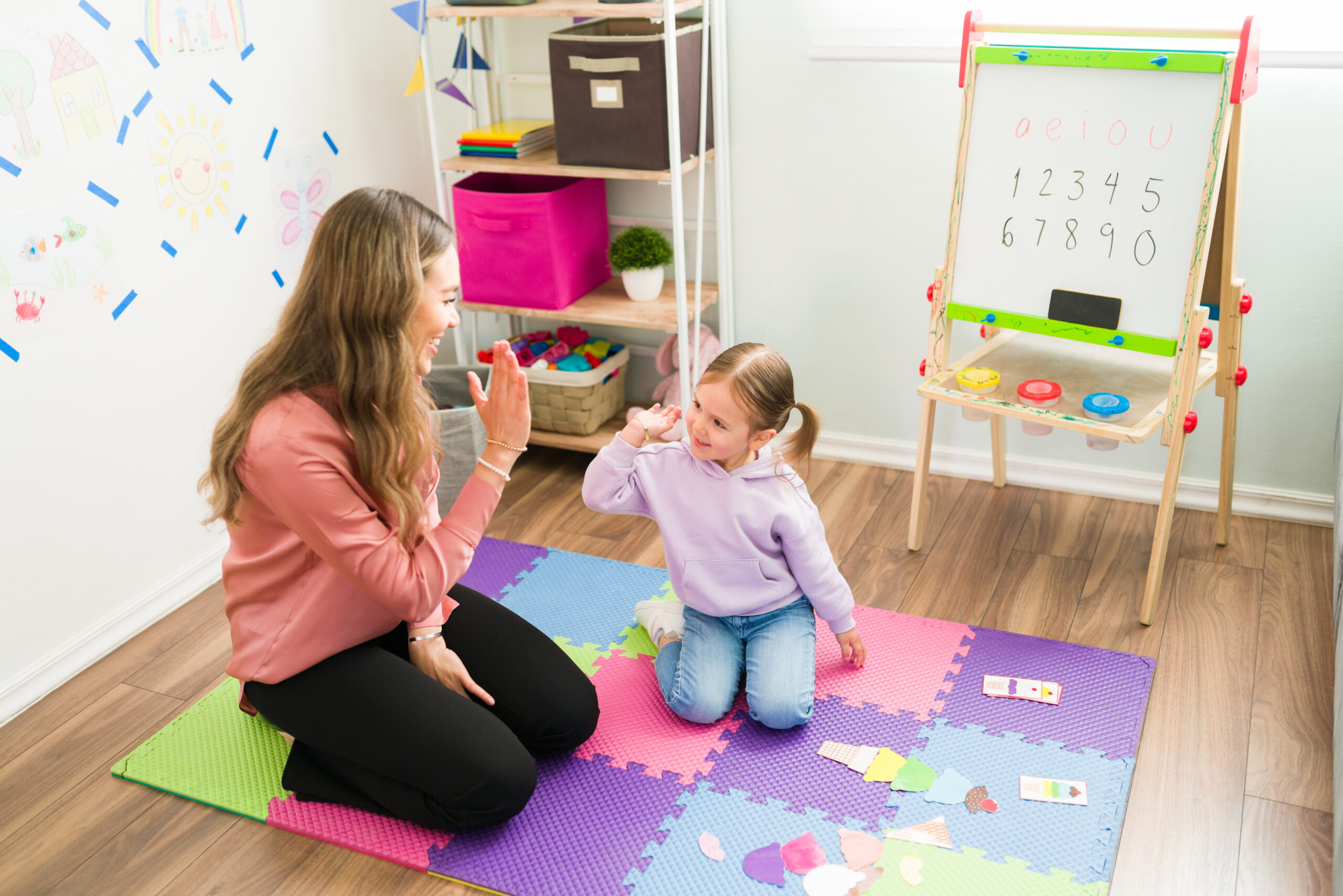
Personalized ABA therapy in a structured clinical setting designed to support focused learning, social interaction, and meaningful skill development.